Today’s Micron earnings did something no other stock I own has ever done: they lifted my entire account at once — both directly and indirectly. I’ve had bigger single-stock winners this year, but none of them rippled across my whole portfolio the way this one report did. It was a real-time lesson in the difference between owning a stock that moves itself and owning a stock that moves the whole market around it. Let me walk you through it.
The Blowout Micron Earnings, in Numbers
Micron reported fiscal Q3 2026 results after the bell, and they didn’t just beat expectations — they obliterated them. Wall Street had been looking for roughly $35 billion in revenue and about $20 in adjusted EPS. Micron delivered far more:
- Revenue: $41.46 billion — up around 346% year over year, versus consensus near $35.7 billion.
- Adjusted EPS: $25.11 — well above the ~$20.5 expected.
- Gross margin: 84.9% — a record, against guidance around 81%.
- Free cash flow: $18.3 billion — a new quarterly record.
By segment, DRAM brought in $31.3 billion (76% of revenue) and NAND $9.9 billion (24%). The standout was cloud memory revenue of about $13.77 billion, which nearly doubled from the prior quarter on the back of HBM (high-bandwidth memory) for AI accelerators and server DRAM.
Guidance That Raised the Bar Again
The outlook was arguably even more impressive than the quarter itself. For the next quarter, Micron guided to revenue of $50.0 billion (± $1.0B) — comfortably above the ~$43.6 billion Wall Street expected — with adjusted EPS around $31.00 and gross margin near 86%.
The Earnings Call Highlights
CEO Sanjay Mehrotra called it an “exceptional quarter” and argued the memory industry is undergoing a structural change, not just another up-cycle. A few points stood out:
- HBM sold out: Micron’s entire 2026 HBM output is already booked under fixed-price contracts. Management said it can currently meet only about 50–66% of customer demand, and expects this tight shortage to persist beyond 2027.
- $100 billion in locked-in revenue: Micron signed 16 “strategic customer agreements,” securing at least $100 billion (roughly 139 trillion won) of committed future revenue — a powerful shift from the memory industry’s historically boom-and-bust pattern toward something far more predictable.
- Next-gen nodes on track: Its 1-gamma DRAM and G9 NAND are ramping smoothly, with next-generation mass production slated for the second half of 2027.
The market’s reaction was immediate: Micron stock jumped more than 13% in after-hours trading.

How One Earnings Report Touched My Whole Account
Here’s where it gets personal — and where the real lesson lives.
The Direct Hit: My Micron Shares
First, the obvious part. I own 25 shares of Micron, so a 13%+ after-hours pop is a direct gain in my account. There’s a backstory to that position, too. My biggest winner this year was actually Rocket Lab — I kept buying around $60, rode it to a gain of over 100%, then trimmed down to just 100 shares. The proceeds from that sale are exactly what I used to buy Micron and Marvell. Micron has climbed steadily since I bought it, and today it delivered in a big way.
The Indirect Ripple: My Korean Covered-Call ETF
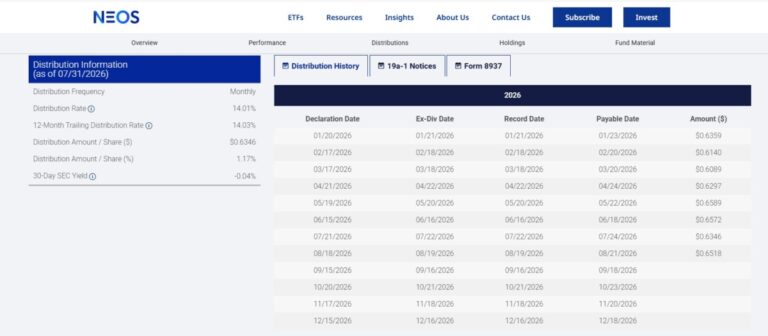
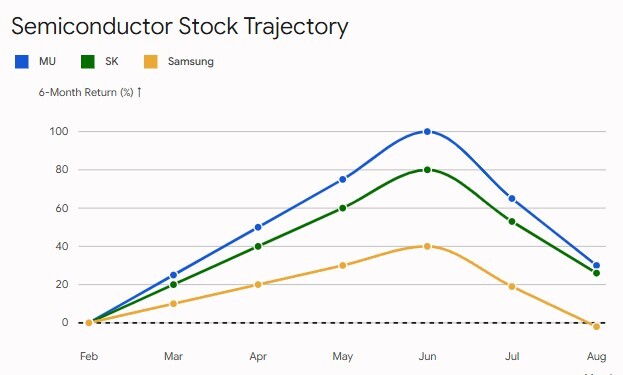
Now the part that genuinely surprised me. Micron’s blowout didn’t just lift Micron — it lifted the entire memory complex. On the strength of this report, Samsung Electronics and SK Hynix are both trading sharply higher. I don’t own either of those two stocks directly. But because they make up roughly half of the KOSPI 200, my Korea-listed covered-call ETF that tracks that index is up more than 5% today. In other words, a US company’s earnings report indirectly boosted my Korean holdings, on the other side of the world, in won. My total assets are rising across the board because of one print.
Why This Felt Different From My Rocket Lab Win
This is the insight I keep turning over. When Rocket Lab doubled, it was thrilling — but it was an island. Its rise moved Rocket Lab and nothing else in my portfolio. Micron is a completely different kind of animal. It sits at a systemic node of the global technology supply chain: as one of only three major memory makers, its results reprice the whole memory sector, in the US and in Korea. So when Micron reports, the shockwave travels through my US position and my Korean position at the same time. That’s the difference between owning an isolated winner and owning a bellwether — a stock whose influence is felt account-wide.
The Lesson: Some Stocks Move Markets, Not Just Themselves
Today reminded me that not all gains are created equal. A stock that only moves itself is nice. A stock that moves an entire sector — and the indexes built on that sector — is something else entirely. Owning a piece of that kind of systemic influence can amplify a good day dramatically.
But intellectual honesty demands the flip side: that ripple cuts both ways. If Micron had missed tonight, the same chain reaction would have dragged down my Korean ETF right alongside my Micron shares. Concentration in a single theme — here, AI memory — magnifies both the upside and the downside. And after-hours euphoria isn’t a locked-in gain; these numbers can look different by the next close. Today the ripple ran in my favor. I won’t forget that it can just as easily run the other way.
Final Thoughts
The most powerful thing about today’s Micron earnings wasn’t the record revenue or the eye-watering guidance. It was watching a single report light up my entire portfolio at once — direct and indirect, US and Korea, dollars and won. That’s the kind of influence very few stocks have, and seeing it work across my own account in real time was a lesson I’ll carry forward.
Investment Disclaimer
This article reflects personal experience and opinions only. It is not financial, investment, tax, or legal advice, and I am not a licensed financial advisor. The holdings I mention describe my own portfolio, not recommendations to buy or sell anything. After-hours moves are not final, earnings reactions can reverse, and concentration in a single theme amplifies losses as much as gains. Past performance does not guarantee future results, and all investing carries the risk of loss, including the loss of your entire principal. Please do your own research and consult a qualified, licensed professional before making any investment decision.