South Korea’s biggest South Korea semiconductor investment in history isn’t going where you’d expect. President Lee Jae-myung just unveiled an 800 trillion won (roughly $580 billion) plan for Samsung Electronics and SK Hynix to build four new memory fabs — not in the greater Seoul area where Korea’s chip industry has always clustered, but in Gwangju and South Jeolla, a region historically left out of the country’s industrial boom. As someone investing in both Korean and US markets from inside Korea, I find this decision fascinating, and I think foreign readers will too. Let me walk through what happened, why Jeolla, and how I’m thinking about it as an investor.
What Was Announced
On June 29–30, 2026, President Lee presided over back-to-back events — one at the presidential office, one in Gwangju — unveiling a combined investment package worth roughly 800 trillion won for the Jeolla region (officially the newly merged “Jeolla-Gwangju Special City”). Samsung Electronics and SK Hynix will each build two new memory fabs there, 400 trillion won apiece, alongside AI data centers, next-generation batteries, and display facilities. Including their existing Yongin cluster commitments, the two companies’ total domestic investment pipeline now reaches a staggering 2,655 trillion won for Samsung and 2,100 trillion won for SK — figures that dwarf Korea’s entire annual government budget of 728 trillion won. Both companies also said they’d accelerate their existing Yongin fab timelines by 7 and 12 years respectively, aiming to double national DRAM capacity within five years.
https://www.etoday.co.kr/news/view/2598871
South Korea Semiconductor Investment: Why Jeolla, of All Places?
This is the question every foreign observer should be asking, because the choice is genuinely unusual.
The Official Reason: Seoul Has Run Out of Power and Water
President Lee’s stated logic was refreshingly blunt. He said the greater Seoul metropolitan area — home to Samsung’s and SK’s existing mega-clusters in Yongin and Pyeongtaek — has hit a hard ceiling on electricity and water supply, resources a memory fab consumes in enormous quantities. With AI-driven memory demand “exploding” beyond what existing capacity plans could absorb, he argued Gwangju and South Jeolla were “the only region that can solve this problem,” citing the area’s renewable-energy potential and available land and water.
The Political Reason: Korea’s Most Overlooked Region
There’s an unmistakable political dimension too, and it’s worth being candid about it. Lee Jae-myung and the Democratic Party have deep historical roots in the Jeolla region, and the president explicitly framed this investment in those terms — quoting a centuries-old phrase attributed to Admiral Yi Sun-sin, “without Honam, there is no nation,” and calling the investment a “historic compensation” for a region that endured discrimination while helping build Korean democracy. Whatever one makes of the politics, it’s impossible to separate this decision entirely from Korea’s regional political history.
My Take: Why I See This as Genuinely Positive
Here’s my honest opinion as someone who lives here. Politics aside, I think locating this investment in Jeolla is a good decision, for one simple structural reason: Korea’s best jobs are absurdly concentrated in the greater Seoul area. Roughly half the country’s population and the overwhelming majority of high-paying corporate jobs sit in a metro region that covers a tiny fraction of the country’s land. If this 800-trillion-won investment actually materializes as planned, it could meaningfully diversify where quality jobs exist in Korea — something the country has needed for decades. A functioning semiconductor cluster in Gwangju and South Jeolla, with the supply-chain companies, engineers, and families that come with it, would be a real counterweight to Seoul’s gravitational pull.
The Honest Risk: Are We Overbuilding for AI Demand?
I also want to be balanced here, because there’s a real concern worth naming. Committing 800 trillion won to new fabs is a massive bet that AI-driven memory demand keeps growing at its current explosive pace for years to come. Memory is a notoriously cyclical business, and capital expenditure decisions made at the peak of enthusiasm have burned the industry before. If AI capex growth cools even moderately from here, Korea could be left with enormous, freshly-built capacity chasing softer demand — exactly the kind of oversupply that has triggered brutal down-cycles in memory chips throughout history.
That said, I’d add one nuance: memory chips are fundamentally a capital-intensity game. Whoever builds capacity fastest tends to win the next cycle, so some level of aggressive investment is simply how this industry competes — it isn’t unique to this announcement.
Why Location Barely Matters for a Country This Small
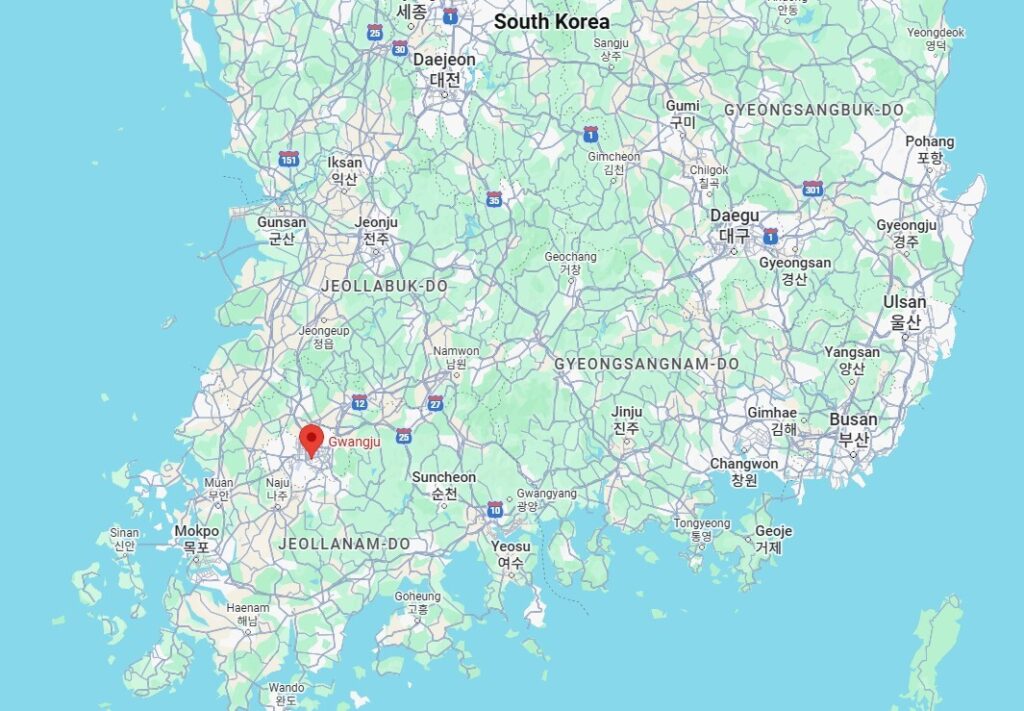
Here’s a thought I keep coming back to, and I think it’s an angle foreign readers will find interesting: Korea is such a small country that the physical location of these fabs almost doesn’t matter for the investment thesis. Seoul to Gwangju is roughly a 3-hour drive, and with Korea’s high-speed rail (KTX), it’s under two hours by train. For context, that’s a shorter commute than many people in Los Angeles or the New York metro area already tolerate daily. Whether Samsung builds in Yongin or Gwangju, the fab still sits inside the same small, dense, extraordinarily well-connected country. For an investor, the “where” is far less important than the “how much” and “how fast” — and on both those counts, this announcement is enormous and moving quickly, with construction targeted to begin within four years.
What This Means for My Portfolio
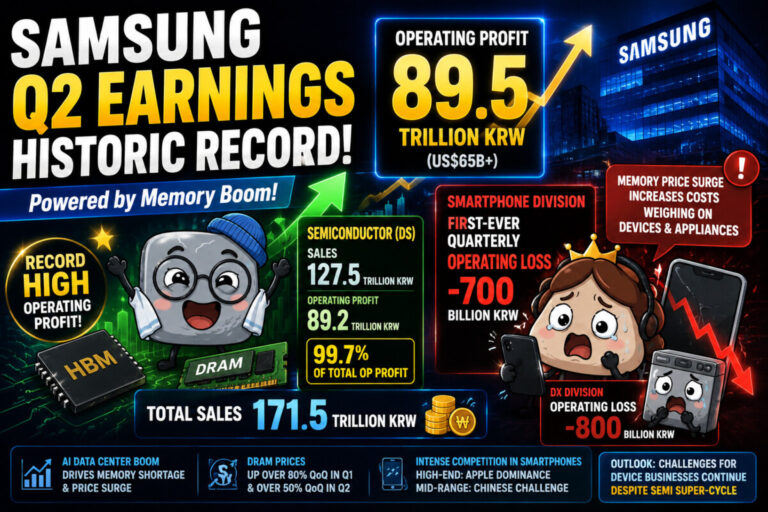
I don’t hold individual Korean stocks — my Korean allocation runs entirely through a KOSPI 200 covered-call ETF, and Samsung Electronics and SK Hynix already make up more than half of that index. So an announcement this large lands directly in my portfolio without me needing to pick a winner between the two. For me, this reinforces the broader thesis I’ve written about before: Korea’s stock market is, in practice, a concentrated bet on these two memory giants, and this 800-trillion-won commitment is one more sign that both companies — and the government backing them — are betting everything on the AI memory supercycle continuing for years to come.
Final Thoughts
An 800-trillion-won semiconductor investment landing in a historically overlooked region is a genuinely unusual story — part economic necessity, part political statement, part enormous bet on AI’s future. I find the regional-balance angle encouraging, I respect the overbuild risk, and as an investor I’m reminded once again just how much of Korea’s economic fate rides on two companies and one technology cycle.
Investment Disclaimer
This article reflects personal opinions and observations only. It is not financial, investment, tax, or legal advice, and I am not a licensed financial advisor. Government-announced investment plans are subject to delay, revision, or cancellation, and large capital expenditure cycles carry real risk of oversupply and price cycles turning against investors. Nothing here is a recommendation to buy or sell any security. Past performance does not guarantee future results, and all investing carries the risk of loss, including the loss of your entire principal. Please do your own research and consult a qualified, licensed professional before making any investment decision.