Yesterday, SK Hynix did something almost unthinkable: it overtook Samsung Electronics to become the most valuable listed company in Korea — the first change at the very top of the market in about 26 years. To understand why that’s so extraordinary, you have to know the SK Hynix history behind it. This is not the story of a company that was always destined for greatness. It’s the story of a business that went bankrupt, was nearly sold off to an American rival for scrap value, and was passed over by suitor after suitor — before becoming the king of the AI memory era. It might be the most dramatic survival story in all of Korean business.
The Painful Birth: The IMF “Big Deal” (1999)
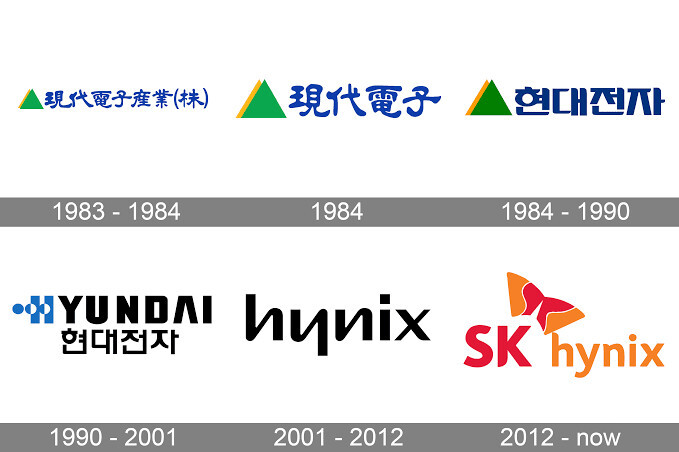
The story really begins in the wreckage of the 1997 Asian financial crisis. To eliminate what it saw as wasteful overlap, the Korean government pushed a forced restructuring known as the “Big Deal,” swapping and merging business lines between conglomerates. In semiconductors, that meant combining Hyundai Electronics and LG Semiconductor.
After a fierce battle of corporate pride, Hyundai Electronics absorbed LG Semiconductor — but the “win” was a poisoned chalice. Hyundai took on enormous debt to fund the takeover. Then, as the early-2000s IT bubble burst, global chip prices collapsed. And to make things worse, the parent Hyundai Group itself fractured in a famous internal succession feud (the “Princes’ War”), leaving no one able to provide support. The victory had set the stage for disaster.
Bankruptcy and the Workout Years (2001)
Crushed by debt and losses, the company was split off from Hyundai Group in 2001, renamed Hynix Semiconductor, and placed under the control of its creditor banks in a “workout” — effectively, it had failed. The numbers from that period are staggering: in 2001, the company earned roughly 4 trillion won in revenue but posted losses of around 5 trillion won, sitting under a debt load near 7 trillion won. This was a company on life support.
The Deal That Almost Erased It: The Micron Sale (2002)
The creditor banks wanted to offload their money-losing problem as fast as possible, and a buyer emerged: America’s Micron Technology. By April 2002, the two sides had signed a memorandum of understanding for Micron to acquire Hynix’s memory business for roughly $4 billion.
But the sale collapsed — and thank goodness it did. The price was widely seen as far too low for Hynix’s real value and technology, igniting a furious national debate about core Korean chip know-how being handed to the US for a bargain. Employees and the union fought it fiercely. Then, in May 2002, despite intense pressure from the creditors, Hynix’s board rejected the Micron offer outright, arguing the company was being sold too cheaply and could survive on its own as the chip cycle recovered. The creditors were furious. In hindsight, it was one of the most important decisions in the history of Korean industry.
The Ugly Duckling Nobody Wanted (2002–2011)
Having chosen independence, Hynix endured brutal, bone-deep sacrifice. With no money to build new fabs, engineers famously refurbished discarded, outdated equipment to run cutting-edge processes — a scrappy, against-all-odds push that let the company pay down debt and turn a profit, graduating from its workout in just a few years. It even climbed past Micron to become the world’s number-two memory maker.
But semiconductors are a brutally cyclical business that demands trillions of won in new investment every year. A company with no strong parent, run under bank supervision, had a clear ceiling. The creditors tried repeatedly to sell it, and would-be buyers like Hyosung Group looked hard — only to back away each time, terrified of what Koreans called the “money-eating hippo” of chip capital spending.
SK’s Bold Bet: Chey Tae-won’s Decision (2011–2012)
Then came the turning point. In 2011, the SK Group — known for stable domestic businesses in telecom (SK Telecom) and energy (SK Innovation) — decided it needed to become a global export powerhouse, and set its sights on Hynix.
Internally, the opposition was intense: Why take on a viciously cyclical business that swallows astronomical investment? One wrong move could shake the whole group. But Chairman Chey Tae-won pushed the deal through on sheer conviction, having spent nearly a year personally studying the semiconductor industry. In November 2011, SK Telecom agreed to acquire roughly a 21% stake for about 3.4 trillion won (around $3 billion at the time), and in March 2012, SK Hynix was officially born. Under SK, the company even appointed its first engineer CEO, cementing an engineering-driven culture that would matter enormously later.
From Survivor to King: The AI and HBM Era
Here’s the part that makes the whole story click. SK Hynix was the world’s first company to develop and mass-produce High Bandwidth Memory (HBM) — the specialized chips that now sit at the heart of the AI boom. That early, patient bet on a niche technology is exactly what vaulted SK Hynix into leadership of the AI memory market. The company that Micron once tried to buy for scrap, that suitors fled from for a decade, is now a global leader feeding the world’s AI accelerators — and this week, it became the single most valuable company in Korea.
Here is the journey at a glance:
| Year | Event |
|---|---|
| 1999 | Forced “Big Deal” merger; Hyundai Electronics absorbs LG Semiconductor, taking on huge debt |
| 2001 | Spun off from Hyundai, renamed Hynix Semiconductor, enters creditor workout |
| May 2002 | Board rejects Micron’s ~$4 billion offer, declares independent survival |
| 2002–2011 | The “ugly duckling” years: refurbished equipment, debt repaid, becomes world #2 — but no permanent owner |
| Nov 2011 | SK Telecom acquires ~21% for about 3.4 trillion won |
| Mar 2012 | SK Hynix officially launches |
| 2026 | Overtakes Samsung as Korea’s most valuable company, riding the AI/HBM wave |
Why This History Matters
Two decisions define everything. First, not selling to Micron in 2002 kept Korea’s memory crown jewel at home. Second, SK’s audacious choice to embrace a company everyone else feared turned a perennial survivor into a champion. Both were acts of bold, almost reckless conviction — the kind of decisive, owner-driven bet that has defined so much of Korean industrial history. Whatever you think of that model, it’s hard to deny that here it produced something remarkable.
Final Thoughts
The SK Hynix history is a reminder that today’s market leaders are not always yesterday’s favorites. A company can be written off, nearly sold for parts, and shunned for a decade — and still end up on top if the right people make the right brave calls at the right moments. As SK Hynix sits atop the Korean market for the first time in a generation, it’s worth remembering just how close it came to never existing at all.
Investment Disclaimer
This article is a historical overview reflecting personal opinions, and is not financial, investment, tax, or legal advice. I am not a licensed financial advisor. A company’s past survival or current leadership says nothing about its future stock performance, and memory-chip companies are famously cyclical and volatile. Nothing here is a recommendation to buy or sell any security. Past performance does not guarantee future results, and all investing carries the risk of loss, including the loss of your entire principal. Please do your own research and consult a qualified, licensed professional before making any investment decision.