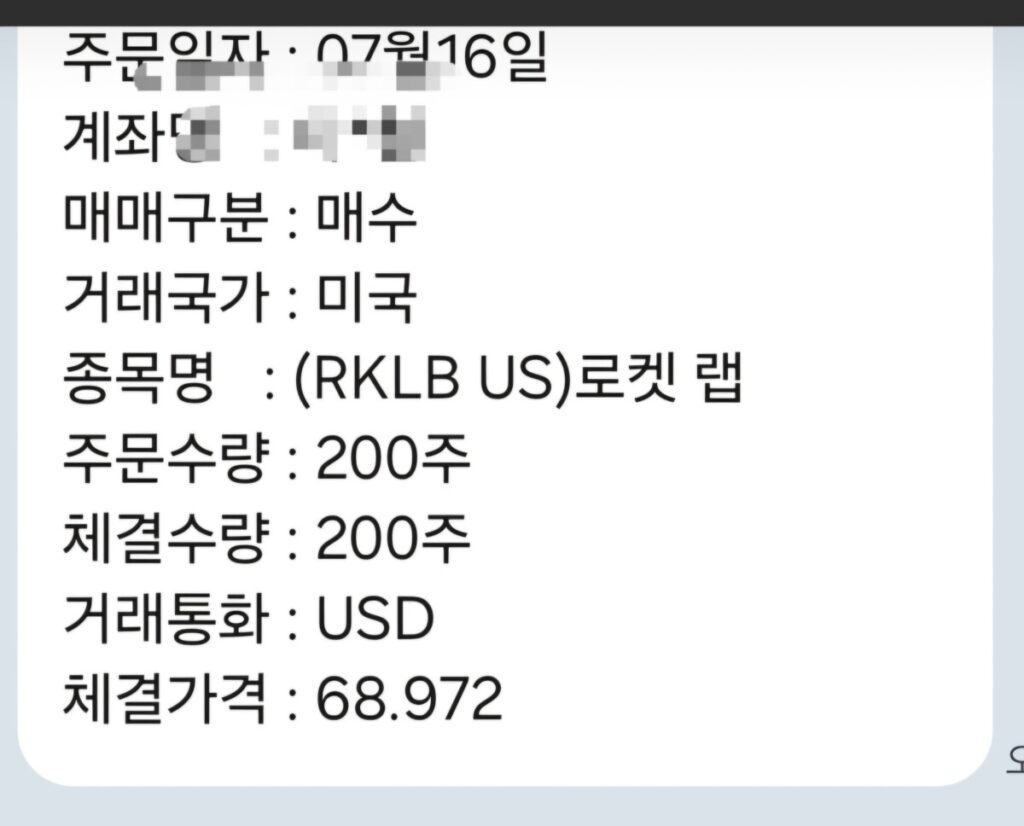
Rocket Lab stock just did something I honestly didn’t expect to see this year: it fell all the way back to the price where I originally built my position. This stock was my single biggest winner of 2026 — I accumulated in the mid-$60s and sold most of it between $120 and $150. And yesterday, with shares back under $70, I bought again: 200 shares at $68.97. This is the diary of that trade, why I think SpaceX’s fading IPO is the real culprit behind the crash, and the detailed Neutron timeline that explains why I’m willing to step back in.
The Round Trip: From My Biggest Winner Back to My Old Cost Basis
Let me recap the journey. I built my Rocket Lab position around an average cost in the mid-$60s, rode it through its spectacular run, and sold in tranches between $120 and $150 — locking in a gain of well over 100% and making it the undisputed MVP of my portfolio this year. I kept a small runner position and moved on.
Then June and July happened. The stock fell hard and fast — nearly 50% from its late-May peak near $151 — and suddenly the price was sitting right where my old average used to be. When a stock I know this well returns to the exact level where I first found it attractive, with the business now demonstrably stronger than it was back then, that gets my attention. So yesterday I bought 200 shares at $68.97.
And I’ve set my next rule in advance: if Rocket Lab breaks below $60, I buy another tranche. Just as I sold in slices on the way up, I’m buying in slices on the way down. No all-in moments, no hero trades — the same staggered discipline in both directions.
Why the Stock Crashed: The SpaceX Black Hole
Here’s my read on what actually caused this collapse, because it wasn’t Rocket Lab’s business. The dominant force, in my view, has been SpaceX.
SpaceX went public on June 12 in the largest IPO in history, raising a record $86 billion at $135 per share and briefly reaching a market cap above $2.2 trillion. An event that enormous acted like a black hole for the entire space sector — pulling investor capital, attention, and enthusiasm toward itself and away from every other space stock, Rocket Lab included. Analysts explicitly described the Rocket Lab selloff as a “post-SpaceX IPO rotation out of space stocks.”
But here’s the twist that convinced me the selling is about sentiment, not fundamentals: SpaceX itself has now fallen below its own IPO price. After surging more than 50% in its first days and touching $225, SpaceX shares slid for days on end and closed at $131.11 on July 16 — under the $135 offering price — shedding over $1.2 trillion in market value from the peak. Even the delayed Starship test flight knocked shares down to $124 in after-hours trading. When the sun of the space sector is itself deflating, the planets around it get dragged down regardless of their individual merit. That’s not a Rocket Lab problem; that’s a sector-wide air pocket.
And air pockets end. The technology sector has always moved in cycles of euphoria and despair, and I believe the time for tech stocks — including space — will come around again. Probably. My job isn’t to predict the exact day; it’s to be positioned, at prices I like, when it does.
The Real Reason I’m Back: Neutron’s Q4 2026 Debut
Sentiment explains the price. But the reason I’m buying rather than just watching is a specific, dated catalyst: the first launch of Neutron, Rocket Lab’s medium-lift reusable rocket, targeted for Q4 2026. As a former project manager, I don’t invest in vague promises — I invest in schedules I can monitor. So here is the Neutron timeline in detail, and why each piece matters.
The Key Dates and Milestones to Watch
August 6, 2026 — Q2 earnings report. This is the next hard checkpoint. Management will update the Neutron schedule, and any confirmation (or slippage) of the Q4 target will move the stock. I’ll be listening for one thing above all: whether flight hardware is progressing on schedule.
Q3 2026 — Final integration and the move to the pad. The first Neutron vehicle is being fitted with its flight avionics and fluid systems at the Middle River facility in Maryland. From there, it ships to the completed Launch Complex 3 (LC-3) at the Mid-Atlantic Regional Spaceport on Wallops Island, Virginia, for integrated testing on the pad. CEO Peter Beck has told investors the single best progress indicator is “items being placed on test stands” — when we see the actual rocket standing at LC-3, the Q4 window becomes real.
Q4 2026 — First flight. The maiden launch of Neutron from Virginia. Important nuance: this first flight will not attempt booster recovery. Reuse comes on the second flight, which plans a landing on Rocket Lab’s ocean barge. That sequencing is smart — it separates the “can it fly?” question from the “can it land?” question, giving the debut a cleaner shot at success.
https://www.nasaspaceflight.com/2026/07/rocket-lab-update-072026
Why Neutron Matters So Much
Neutron is not just another rocket — it’s a completely different business. Rocket Lab’s workhorse Electron is a small rocket carrying tiny payloads; Neutron can lift up to 13 tons to low Earth orbit, putting it squarely in the medium-lift market that SpaceX’s Falcon 9 dominates today. That market is where the large, lucrative commercial constellation and national-security contracts live.
The demand is already proven: an anonymous customer has pre-booked five dedicated Neutron launches through 2029 — the first confirmed manifest for a rocket that hasn’t yet flown. The company enters this catalyst from a position of strength, too: 2025 was a record year with $602 million in revenue (up 38%), a 21-launch record with 100% mission success, and a contracted backlog above $2 billion. A successful Neutron debut on schedule would, in my personal view, give the stock a real shot at revisiting its former high near $150. That’s my thesis, and the Q4 launch is its test.
The Risks I’m Carrying With Open Eyes
Honesty section. Neutron’s schedule has already slipped once — the Q4 target itself is the result of a delay caused by a first-stage tank that ruptured during pressure testing in January (a manufacturing defect from a hand-laid tank, since replaced by an automated fiber-placement process). Rockets are brutally hard, and further delays are entirely possible. Debut launches also fail at a meaningful rate, and a failed maiden flight would hit the stock severely. The valuation still prices in a great deal of future success even after this 50% drawdown, and heavy insider selling — including by the CEO — has added to the negative sentiment. This is why I buy in tranches with pre-set levels instead of going all-in: if the story breaks, I want to have only deployed part of my capital.
My Rules, Written Down
- Sold in slices on the way up: $120–150, profits locked.
- Bought back yesterday: 200 shares at $68.97, right at my old cost basis.
- Next buy line: below $60, another tranche.
- Position size: speculative satellite, never core. Sized so a total loss would sting but not wound.
- The monitoring checklist: August 6 earnings → hardware at LC-3 → Q4 launch.
Final Thoughts
Rocket Lab stock gave me my best trade of the year on the way up, and now the SpaceX-driven selloff has handed the shares back to me at my original price — with a stronger business attached and a dated catalyst ahead. Whether Neutron flies on time will decide whether this second act works. Until then, I’ll be watching the test stands, the earnings call, and my buy levels — in that order.
Investment Disclaimer
This article is a personal trading diary reflecting my own opinions, trades, and speculation only. It is not financial, investment, tax, or legal advice, and I am not a licensed financial advisor. Buying a falling stock is risky — a price returning to a previous level does not guarantee a rebound, and further declines are always possible. Pre-profit, high-multiple growth stocks like Rocket Lab carry substantial risks including schedule slippage, launch failure, dilution, and the potential loss of the entire investment. Nothing here is a recommendation to buy or sell any security. Past performance does not guarantee future results, and all investing carries the risk of loss, including the loss of your entire principal. Please do your own research, review the company’s official disclosures, and consult a qualified, licensed professional before making any investment decision.