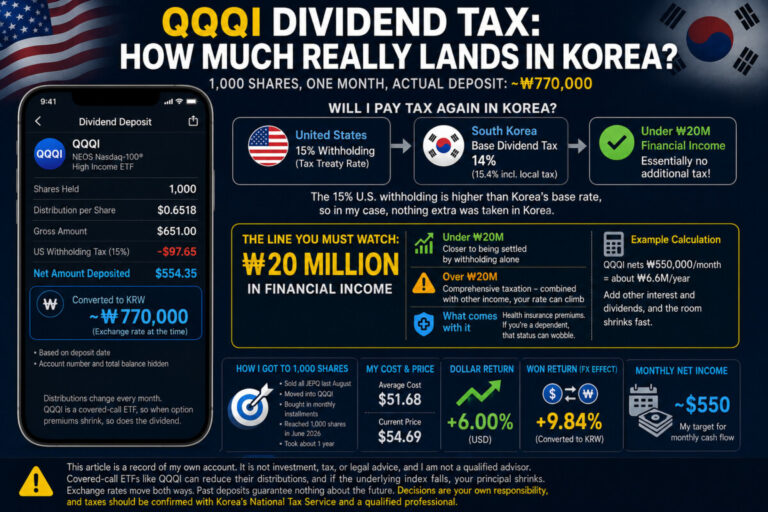
My QQQI dividend arrived today. $0.6518 per share, and with 1,000 shares that’s $651 before tax — $554 after the 15% withholding, or roughly ₩770,000. It landed quietly, without me thinking about it once.
In the same account sits 100 shares of Micron worth over ₩100 million. That position shakes me every single day.
Same brokerage account, same investor, completely different experience. This dividend ETF vs individual stock contrast has been teaching me something uncomfortable about my own temperament, and I want to write it down honestly.
Lesson 1: A Dividend ETF Is Boring, and That’s the Point
Let me start with the numbers that make QQQI so unremarkable.
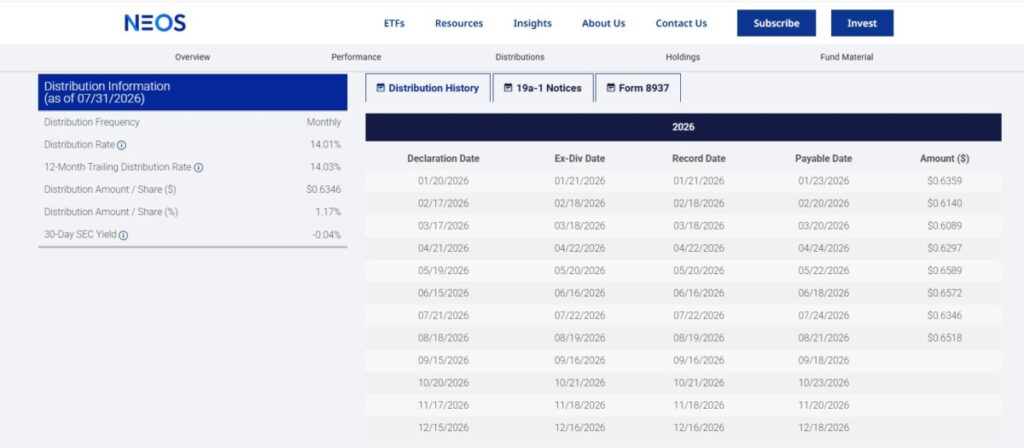
This year, its monthly distribution has ranged from a high of $0.6589 to a low of $0.6089. That’s an 8.2% swing across the entire year. The average has been $0.6364, so August’s $0.6518 sits slightly above the mean. Last month dipped to $0.6346 before recovering.
Here’s what that predictability actually buys me. I check the distribution announcement, the money arrives, I transfer it to my household account. That’s the entire relationship. I can plan our living expenses around it because next month will look roughly like this month.
I’m on parental leave, so this money gets spent, not reinvested. And that’s fine — the whole point of building this position was to fund a year at home with my kids.
Lesson 2: The Individual Stock Costs More Than Money
Micron is a different animal entirely.
When I was working full-time, my portfolio was heavily weighted toward ETFs. I held individual stocks only in small amounts, and there was a good reason: my job was demanding, individual positions require attention, and I couldn’t respond properly while working. So I simply didn’t grow that side of the portfolio.
Then parental leave started. I finally had time, so I increased my individual stock exposure. Now I could actually pay attention.
Here’s how that turned out: I pay attention constantly.
Interest rates. What the Treasury Secretary said. What signal the Fed sent. What Trump said this morning. Whether Apple is sourcing Chinese memory. Whether Jensen Huang is raising prices. Every earnings report from every adjacent company.
I check the price several times a day. Honestly, leave has made it worse — more time means more news, and more news means more wobbling. I assumed free time would let me respond better. Instead it just exposed me to more noise.
Lesson 3: Opposing Arguments Both Sound Right
Here’s what I’ve noticed about analysts and influencers. Listen to any of them and the logic sounds sound.
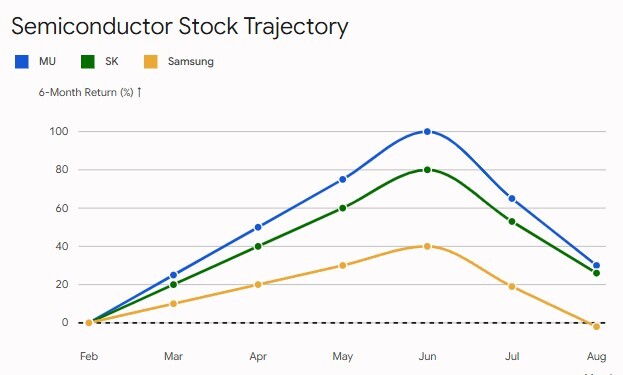
The memory cycle is peaking — there’s evidence for that. The cycle is just beginning — there’s evidence for that too. Chinese oversupply is a real concern. Exploding AI demand is a real fact.
The problem is that contradictory positions both sound reasonable. So one argument makes me want to sell, the next makes me want to buy more, and my conviction swings daily.
Eventually a question surfaced: why did I buy Micron in the first place?
My thesis was a five-year one. AI right now lives inside screens — chatbots, image generation. I believed there would come a moment when it becomes physically visible: robots, autonomous vehicles, AI showing up as real objects in daily life. Getting there requires an enormous amount of memory. That’s why I bought.
Does one morning’s headline break that thesis? No. Whatever Trump said, whatever this quarter’s earnings showed, my reason for owning it is unchanged.
And yet I was checking the price every few minutes. I bought with a five-year horizon and monitored it on a five-minute one. Writing that down made me wince.
The Real Problem: No Framework of Your Own
There’s one reason investors get shaken, and it’s this: you don’t have your own criteria.
Without criteria, someone else’s opinion becomes your criteria. A YouTuber says sell, you sell. Says buy, you buy. And you end up buying tops and selling bottoms.
My criteria for Micron were clear. Over five years, as AI infrastructure becomes physically implemented, memory demand keeps growing. That’s the thesis.
So what should I actually monitor? Whether that thesis breaks. Has AI investment genuinely reversed? Has memory demand structurally shrunk? Has Micron’s technological position collapsed?
If those change, I sell. A 3% down day is not one of those things. It’s noise.
The trouble is that knowing this intellectually doesn’t make the feeling go away. I checked the price several times today too.
My Plan: Solve It With Structure, Not Willpower
Since willpower isn’t working, I’m changing the structure instead.
When Micron reaches my target price, I’ll move those proceeds into ETFs.
The reasoning comes straight from today. That ₩770,000 QQQI distribution arrived without a single thought from me. It wasn’t shaken by any headline.
Two positions in one account: one rattles me daily, the other quietly sends money.
Now, I want to be fair to the individual stock. On pure returns, Micron could absolutely outperform. If it runs, it beats the ETF by a wide margin. That’s true.
But there’s a price I pay for that possibility, and it’s peace of mind. Checking prices several times a day, heart rate spiking on a headline, staying up to check the US open. That’s eating into time I should be spending with my children during leave — time I took this leave specifically to have.
Returns versus peace of mind. I’m shifting weight toward the latter.
This isn’t about eliminating individual stocks. It’s that having over ₩100 million in a single name doesn’t suit my temperament. I’ll keep what I can carry comfortably and move the rest into ETFs.
There’s a Korean expression for this: the size of your bowl. My bowl isn’t big enough yet to hold ₩100 million in a single stock. Recognizing that isn’t defeat — it’s just accurate self-assessment.
I want to be able to look at my kids’ faces without thinking about a stock price.
What This Comparison Actually Taught Me
The dividend ETF vs individual stock question isn’t really about which produces better returns. It’s about which one you can hold without it holding you.
To summarize where I landed:
- QQQI August distribution: $0.6518/share, $554 after tax on 1,000 shares (~₩770,000). Dipped last month, recovered this month. Goes to living expenses.
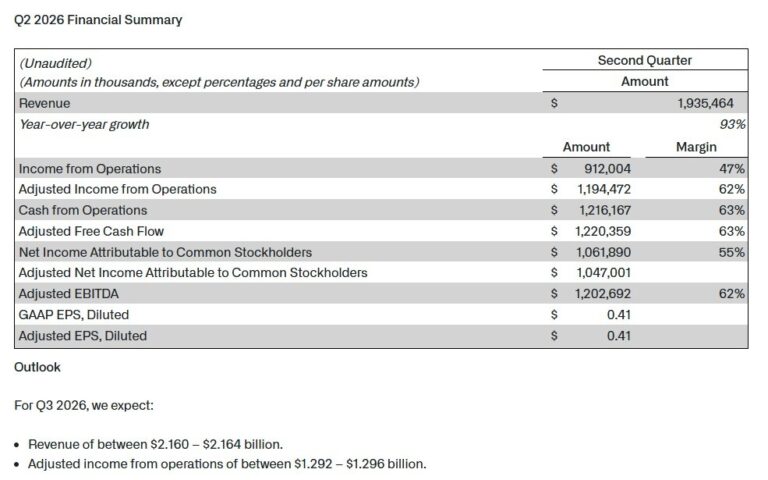
- Micron, 100 shares: shakes me daily via rates, the Fed, Trump, Jensen Huang, and endless adjacent headlines.
- The gap: I bought Micron on a five-year thesis but monitored it on a five-minute one.
- The fix: at my target price, rotate proceeds into ETFs and return to investing I can actually live with.
If you’re also being rattled daily by an individual position, I understand that feeling well. Remembering why you bought helps a little. Sizing it so it can’t dominate your attention helps more.
Investment Disclaimer
This article shares personal investing experience and emotions rather than financial advice. It is not investment, tax, or legal guidance, and I am not a licensed financial advisor. Covered-call ETFs can lose principal and their distributions vary every month. Individual stocks carry high volatility and significant loss potential. Overseas assets carry currency risk. Nothing here recommends buying or selling any security. Past performance does not guarantee future results, and all investing carries the risk of loss, including the loss of your entire principal. Please do your own research and consult a qualified professional before investing.