I’m not writing about this crash from the sidelines. Memory stocks crashing is my daily reality right now — I hold Micron directly, and my Korean allocation sits in KOSPI 200 covered-call ETFs where Samsung and SK Hynix make up more than half the index. So when the entire memory complex fell into a bear market these past three weeks, I got hit from both sides of the Pacific at once. Here’s what actually happened, why I think it happened, and what I’m doing about it — honestly, as someone with real money in the middle of it.
Three Weeks That Erased $1.5 Trillion
Let me lay out the timeline, because the speed of this thing still amazes me.
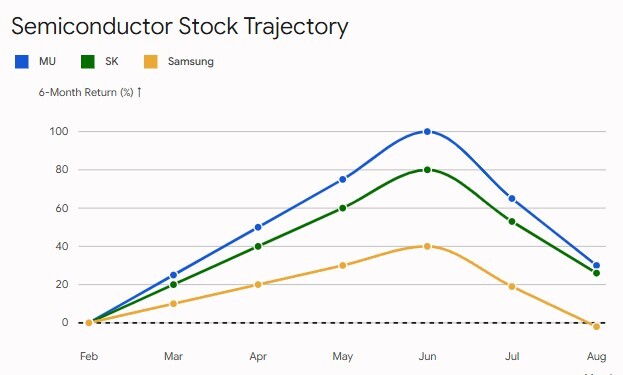
Since June 25, semiconductor stocks have lost roughly $1.5 trillion in market value. Micron alone shed nearly $350 billion. On July 2, SK Hynix fell 14.6% and Samsung dropped 9% in a single session, forcing an emergency trading halt on the KOSPI. On July 7, Samsung reported the best quarter in its history — 89.4 trillion won in operating profit — and the stock fell anyway. By July 8, memory names were on their fifth straight day of declines.
Then came the strangest stretch. SK Hynix made its blockbuster Nasdaq debut on July 10 — seven times oversubscribed, $26.5 billion raised. Three days later, a Korean brokerage published a Q2 profit estimate for SK Hynix that was 8% below consensus, citing slower HBM4 shipments. The stock fell 15% in Seoul, its largest single-day drop ever. The KOSPI sank 9% below the 7,000 line. By mid-July, Micron, Samsung, SK Hynix, and even the dedicated memory ETF were all down more than 20% from their highs — an official bear market. Micron sits roughly 33% below its June peak.
All of this happened while HBM remains sold out into 2027 and every major producer keeps printing record numbers. That’s the paradox this whole post is about.
https://finance.yahoo.com/markets/stocks/articles/buy-dip-memory-stocks-tech-145109105.html
Why It Fell: My Reading of the Seven Forces
I’ve gone through this crash line by line, and I count seven forces stacked on top of each other. None of them alone explains a 30% drawdown. Together, they do.
First, plain profit-taking. Micron was up 243% year to date before this started. SanDisk was up 707%. When stocks run like that, someone eventually rings the register, and the first sellers trigger the next ones.
Second, the SK Hynix listing itself. A huge new supply of shares hit the US market, and investors genuinely didn’t know how to price the ADR against the Korean stock. One strategist put it bluntly: everybody’s confused about where the fair price is. Confusion breeds selling.
Third, that brokerage estimate cut — the HBM4 shipment delay call. It was one report, 8% below consensus, but it landed on a market already nervous, and it cut directly at the core bull thesis.
Fourth, the Meta shock. When reports surfaced that Meta would lease out its own AI computing capacity, the market started questioning whether hyperscaler capex can keep growing forever. That question, once asked, doesn’t go away quickly.
Fifth, a media report that Nvidia might halve the memory configuration on its next Rubin platform. Unconfirmed, but HBM is the highest-margin product these companies make, so even a rumor moves billions.
Sixth, Michael Burry opened a put position against Micron near the highs. Whatever you think of his track record, his name alone shifts sentiment.
Seventh — and this one made the fall so violent — leveraged ETFs. The 2x memory products fell far more than twice their underlying assets, which tells you forced liquidations were cascading. Margin calls don’t read earnings reports.
The Strange Part: Nothing Fundamental Actually Broke
Here’s what I keep coming back to. Samsung didn’t miss earnings — it posted monster numbers that simply failed to beat expectations that were already priced in. Micron’s HBM is sold out well into future quarters. SK Hynix keeps reporting strong demand tied to Nvidia’s accelerators. DRAM and NAND prices rose sharply last quarter across the board.
In other words, the crash wasn’t caused by bad results. It was caused by great results that weren’t great enough for a market that had already imagined perfection. There’s a real difference between “the business is deteriorating” and “the expectations got ahead of the business,” and this crash is squarely the second kind. That doesn’t make the losses hurt less. But it completely changes what I should do about them.
Retail Sold, Institutions Bought
One more detail from this crash stuck with me. The flow data shows retail investors panic-selling while institutional money moved in the opposite direction, with large orders pouring into the very names individuals were dumping. And Mizuho’s tech desk pointed out something I’d half-forgotten: Micron has had six separate drawdowns of 14–21% since mid-2025, every few months like clockwork, and each one turned out to be a buying opportunity rather than a peak. Their words, not mine: these selloffs are not a signal of peak, nor any reason to dump.
I’m not saying institutions are always right. They aren’t. But when the people with research teams are buying what the people watching price charts are selling, I at least want to know which group I’m behaving like.
What I’m Actually Doing
So here’s my honest position, in both time frames.
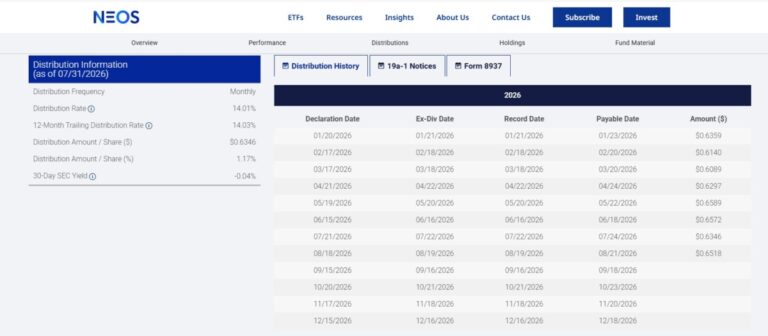
Short term, I expect more pain and I’m fine with it. Nothing about this selloff feels finished. Sentiment is wrecked, the leveraged products are still unwinding, and one more scary headline could easily produce another 10% down day. I hold Micron at a paper loss from my recent adds, and my Korean covered-call ETFs took the full force of the KOSPI’s drop. I’m not pretending otherwise. My monthly distribution from those ETFs even dipped this month because the fund’s asset base shrank. Short-term, this is simply an ugly stretch, and I’ve sized my positions so that ugly stretches are survivable.
Long term, my thesis hasn’t moved an inch. I wrote down my exit rule months ago, before any of this happened, precisely so I wouldn’t have to think clearly during a crash: I sell when the Big Seven hyperscalers — the actual buyers of all this memory — miss earnings or cut their capex plans. Not when a brokerage trims an estimate. Not when a rumor about a chip configuration circulates. Not when Michael Burry buys puts. When the demand side actually breaks. It hasn’t. Until it does, every one of these drawdowns is noise on top of a supercycle, and I keep accumulating on the way down — in tranches, at pre-set levels, never all at once. The same discipline that had me selling Rocket Lab in slices on the way up has me buying memory in slices on the way down.
There’s one date circled on my calendar: July 29, when SK Hynix reports Q2 earnings, possibly alongside a buyback announcement. That’s the next real test of whether the fundamentals are holding. If the numbers confirm what Samsung and Micron already showed — record demand, tight supply, fat margins — then this crash will have been exactly what Mizuho called it: another dip in a long series of profitable dips. If the numbers crack, I’ll reassess with open eyes.
What This Crash Taught Me (Again)
Living through this from inside two markets at once, one lesson keeps hammering itself home: in a supercycle, the price and the business can tell completely different stories for weeks at a time. The business says “sold out into 2027.” The price says “panic.” Both are real. The whole game is knowing which one to act on — and having written your rules down before the panic arrived, so the decision was already made by a calmer version of you.
My calmer self decided months ago: watch the hyperscalers, ignore the rest, buy in slices, size for survival. So that’s what I’m doing.
Investment Disclaimer
This article reflects my personal opinions, holdings, and experience only. It is not financial, investment, tax, or legal advice, and I am not a licensed financial advisor. Memory-chip stocks are famously cyclical and volatile — a drawdown can deepen well beyond anyone’s expectations, past dip-buying patterns do not guarantee future recoveries, and my thesis may simply be wrong. Nothing here is a recommendation to buy or sell any security. Past performance does not guarantee future results, and all investing carries the risk of loss, including the loss of your entire principal. Please do your own research and consult a qualified, licensed professional before making any investment decision.