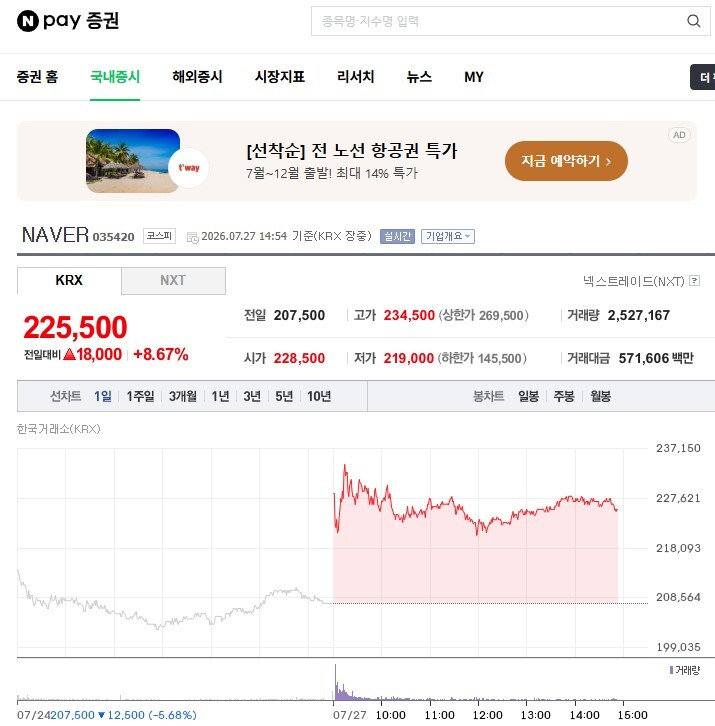
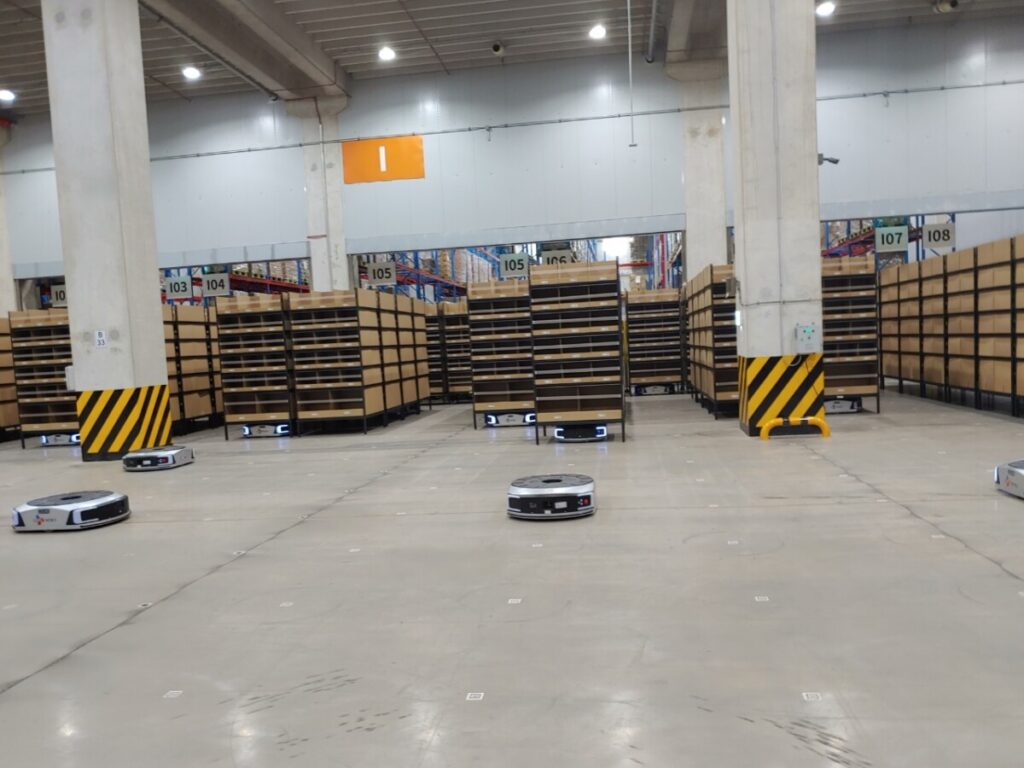
Naver vs Coupang has quietly become one of the most interesting corporate rivalries in Korea, and I have a personal reason to find it fascinating: I actually worked on the ground floor of Naver’s logistics buildout. As a project manager, I led the installation of 128 automated guided vehicles (AGVs) at a CJ Logistics center in Gunpo — the very kind of “allied forces” infrastructure Naver is now leaning on to challenge Korea’s e-commerce king. Let me walk through what’s actually happening in this rivalry, and share what my own project taught me about who might come out ahead.
The Numbers Behind Naver’s Sudden Surge
Naver’s shopping app, “Naver Plus Store,” has been on a genuine tear. According to Mobile Index, its monthly active users jumped 7.5% in May alone to 8.75 million, overtaking 11st Street (8.21 million) to become Korea’s second-largest e-commerce app behind Coupang. By June, MAU reportedly crossed 10 million, narrowing the gap with Coupang further — a remarkable climb for an app launched barely a year earlier, in March 2025. In May, it was also the single most-downloaded shopping app in the country, with over 700,000 new installs.
Why Coupang Has Stumbled
Coupang’s struggles aren’t really about Naver getting better — they’re largely self-inflicted. A massive data breach last year exposed 33.7 million customer records, and the fallout has been brutal: the company posted an operating loss of 354.5 billion won in Q1 2026, its first quarterly loss in seven quarters, driven by the enormous cost of coupon compensation and damage control. On top of that, Korean regulators have reportedly moved to impose a record fine of roughly 600 billion won, which — if finalized — could strain Coupang’s cash flow and even threaten its planned logistics infrastructure investment. A “de-Coupang” trend has also set in, with user activity stalling for months following the breach, even as the company’s fixed costs (its owned warehouses and direct-purchase inventory model) keep piling up regardless of demand.
Two Completely Different Strategies
Naver and Coupang aren’t just competitors — they started from opposite ends of the business. Coupang built its empire on logistics: a decade of massive capital investment in fulfillment centers and its famous “Rocket Delivery,” which turned next-day shipping into a Korean cultural habit and made Coupang the closest thing Korea has to a “national app.” Naver, by contrast, built its empire on search — launching its “Smartstore” marketplace in 2014, adding Naver Pay in 2015, and steadily growing a commerce layer on top of the search-and-portal habits nearly every Korean already had. Today, by gross merchandise value, Coupang holds about 22.7% of the e-commerce market and Naver about 20.7% — the two together control nearly half the entire market between them.
How Naver Is Fixing Its Old Weaknesses Through “Allied Forces”
Naver’s historical weak points were fresh groceries and physical logistics — areas where it had no direct-purchase infrastructure or cold-chain network, unlike Coupang Fresh. Rather than building everything itself, Naver has assembled what Korean media calls an “allied forces” strategy: partnering with Kurly (the operator of Market Kurly) to launch “Kurly N Mart” for fresh food, pulling in major retailers like Homeplus and Lotte Mart into the Naver Plus Store platform, and even taking a 33 billion won equity stake in Kurly to deepen the partnership. For delivery, instead of building its own warehouses like Coupang, Naver partnered with established logistics companies — CJ Logistics and Hanjin among them — to create “N Delivery,” offering same-day, next-day, Sunday, and dawn delivery options. AI-driven personalized recommendations round out the pitch: Naver says over 50% of Naver Plus Store’s transaction value now comes through AI-recommended products, drawing on years of search and browsing data most competitors simply don’t have.
https://share.google/xboj309L3HA1KPIep
My Personal Window Into This Rivalry
Here’s where this story gets personal for me. I’ve actually worked as a project manager on exactly this kind of logistics infrastructure — leading the installation of 128 AGVs (automated guided vehicles) at a CJ Logistics center in Gunpo, part of the automation backbone that powers deliveries for partners like Naver. CJ Logistics, notably, is the “CJ Daehan Tongun” logistics arm of the CJ Group, one of Korea’s major conglomerates, and one of the key partners in Naver’s delivery alliance.
What struck me most was a direct comparison: I’ve also worked on projects with Coupang, and the difference in how the two organizations operated was stark. CJ knew exactly what they wanted and communicated it precisely — clear specifications, clear priorities, clear decision-making. Working with them, I genuinely learned more as a PM, because the requirements were crisp and the feedback loop was tight. Coupang, by contrast, often felt like it lacked internal alignment on what it actually wanted to build — priorities shifted, and it wasn’t always clear who owned the final decision.
My Take: Why I Think Naver’s Approach Could Win
This is purely my personal opinion, based on limited project-level experience — not a professional industry analysis. But based on what I saw firsthand, I lean toward thinking Naver’s chances are better than people might assume, precisely because it doesn’t try to run logistics alone. By partnering with an operator like CJ Logistics — a company that, in my experience, executes with real precision and clarity — Naver gets access to operational discipline it might struggle to build in-house from scratch. Pairing that kind of execution partner with Naver’s genuine strengths (search data, AI-driven personalization, a payment ecosystem, and a portal nearly every Korean already uses daily) could be a more resilient combination than Coupang’s all-in-house model, especially now that Coupang’s fixed-cost logistics network is a burden during a period of stalled growth. To be clear, this is a hunch built on one project’s worth of experience, not a rigorous corporate analysis — but it’s the honest lens I bring to this rivalry.
What Happens Next
The competition isn’t staying inside e-commerce, either. Naver is reportedly weighing an acquisition of Baedal Minjok (Baemin), Coupang Eats’ rival in food delivery — a move that, if completed, would extend this rivalry from online shopping into food delivery as well. Today, Coupang still leads on delivery speed and logistics scale, while Naver holds the edge in product variety, search, price comparison, and its seller ecosystem. Which strengths matter more to Korean consumers over the next few years may decide who ultimately wears the e-commerce crown.
Final Thoughts
Naver vs Coupang is shaping up to be one of the more compelling business rivalries in Korea, and having stood inside a CJ Logistics warehouse watching those 128 AGVs come online, I find myself rooting for the underdog’s structural approach — even knowing my view is shaped by a small, personal sample size. Whoever wins, Korean shoppers are likely to benefit from the fiercer competition either way.
This article reflects personal opinions and professional experience only, based on limited project-level exposure to both companies’ logistics partners. It is not a comprehensive industry analysis, investment advice, or a recommendation regarding any company’s stock. Business dynamics can shift quickly, and past project experiences do not necessarily predict corporate outcomes.