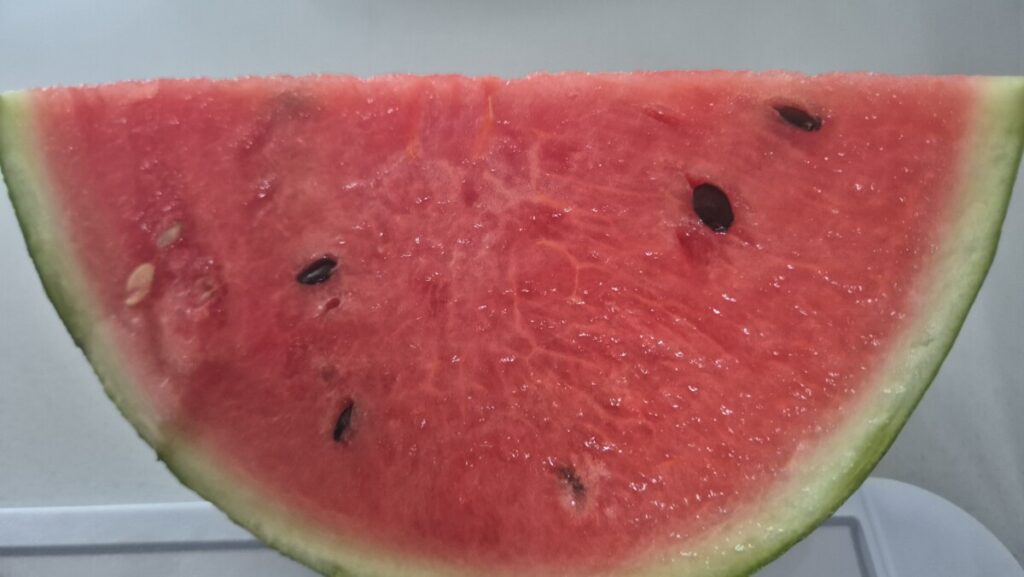
It’s a Monday afternoon and I’m eating watermelon. Cold, sweet, in season — sitting at my kitchen table with no meeting to rush to, no boss wondering where I am. I ate it simply because I wanted to. That small, almost silly moment is, I’ve come to realize, exactly what financial freedom feels like. Not a yacht. Not a mansion. A slice of watermelon, eaten on my own schedule, three months into my parental leave. Let me tell you why that slice means so much to me — and why a shift in perspective changed everything.
The Watermelon Test
These days, my life runs on a quietly radical principle: I do things when I want to do them. I eat the seasonal fruit I’m craving the moment I crave it. I exercise when my body asks for it, not when a calendar allows it. I write the words I actually want to write, at the hour the ideas come. After years of trading my time for a salary, this ownership of my own days still feels almost unreal.
This isn’t laziness — I’m raising kids, after all. It’s autonomy. And autonomy, I’m learning, is the real luxury that money can buy. The watermelon is just the most delicious proof of it.
The Numbers Behind the Calm
So how is this possible while I’m on leave with no salary? Two streams.
The first is dividend income — about 2 million Korean won a month, roughly $1,300 (at around 1,530 won to the dollar), flowing from my high-yield covered-call ETFs: QQQI in the US, plus SOL and KODEX 200 Target Weekly Covered Call in Korea. The second is my government parental-leave benefit, about 2.5 million won, or roughly $1,600. Those two alone come to nearly $3,000 a month.
In Korea, I’ll be honest, $3,000 a month doesn’t make you feel wealthy. It’s a respectable number, but in a society this expensive and this competitive, it can feel like you’re merely keeping pace. For a long time, that’s exactly how I looked at it. And then I changed where I was standing.
Why $3,000 a Month Looks Different From Space
Here’s the realization that reframed my whole life. Step back from Korea and look at the entire planet, and that same income tells a startlingly different story.
The global median income is only around $4,000 per year, adjusted for purchasing power. By widely-used global estimates, an income around $50,000 a year puts you in roughly the top 3% of all earners on Earth, and about $60,000 puts you near the global top 1%. Even someone living at the US poverty line out-earns about 85% of the world’s population. My roughly $36,000-a-year pace, then, sits firmly in the global upper tier — comfortably ahead of the vast majority of people alive today.
The exact same number that feels modest on a Seoul street is, from the view of the whole world, genuinely a lot. Nothing about my bank account changed. Only my vantage point did.
The Trap of Looking Only at Korea
I think this is one of the most important lessons I’ve learned, and it’s a deeply Korean one. We are a people wired to compare and to rank. We measure ourselves against the neighbor’s apartment, the colleague’s promotion, the friend’s new car. Looked at that way, you are always behind someone — and so you scramble, endlessly, to get richer, never quite arriving. The finish line keeps moving.
But comparison is a choice of frame, not a law of nature. When I lift my eyes from my own street to the whole world, the anxious “I don’t have enough” quietly becomes a grateful “I have so much.” Same life. Same income. Completely different feeling. The struggle was never really about the money; it was about which horizon I chose to measure against.
Gratitude as a Strategy, Not Surrender
I want to be clear that this isn’t me giving up on ambition. I’m still building, still investing, still hunting for the next income stream. But choosing gratitude isn’t complacency — it’s the thing that lets me actually enjoy what I’ve already built instead of sprinting past it. What’s the point of constructing a life of freedom if I’m too busy comparing to taste the watermelon?
I’m deeply thankful for this season: for income that covers my family, for the autonomy to be present with my children, and for the perspective to recognize how rich that combination truly is by any global measure.
Final Thoughts
If you take one thing from this, let it be this: before you decide you don’t have enough, check which world you’re comparing yourself to. Measured against your most ambitious neighbor, you may always feel poor. Measured against the planet, you may discover you’re already living a life most people only dream of. I found that out over a slice of watermelon — and I’ve never tasted anything sweeter.
A quick note: this is a personal reflection, not financial advice. Income from parental-leave benefits is temporary, and dividend distributions vary — what I’m really sharing here is a shift in perspective, not a guaranteed financial outcome.