A working project manager’s perspective from inside Korea’s most aggressive logistics machine. Opinion, not investment advice.
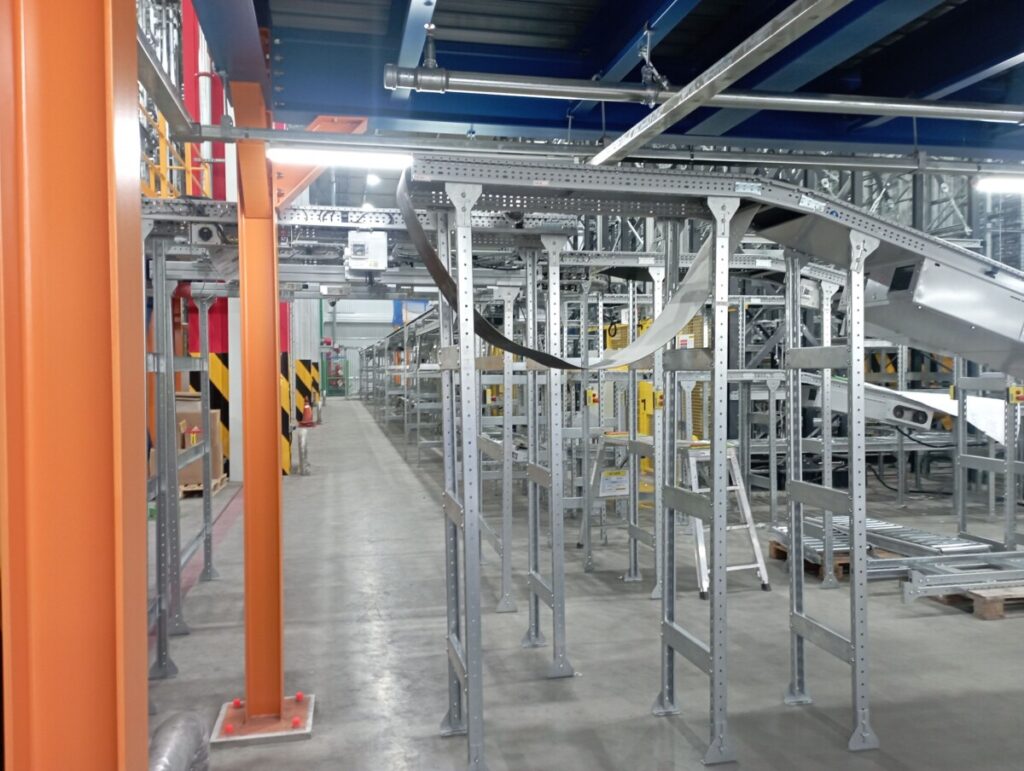
I live in, I invest on both sides of the Pacific — U.S. and Korean tickers — and my job once put me somewhere almost no retail investor ever gets to stand: inside Coupang’s fulfillment network. As a project manager, I installed and commissioned equipment in their frozen and refrigerated warehouses, the cold-chain backbone behind next-morning grocery delivery.
What I saw from the inside is the reason I won’t buy CPNG. Here’s the full case — and I’ll be fair to the other side, too.
1. Is Coupang (CPNG) a Good Investment in 2026?
Short answer: not for me. Coupang is an operationally brilliant company sitting on a strong balance sheet — and it is also, in my first-hand experience, a fragile organization that grows faster than it can govern. The 2025 data breach and the record fine that followed didn’t surprise me. They looked like the predictable output of problems I’d already watched up close: expansion outrunning control, partners squeezed, and an unresolved culture clash at the top.
If you only model the numbers, the stock can look cheap. If you weigh culture and governance — the things that decide whether a company compounds for a decade — the picture changes. That’s the case I’ll make below.
2. Who Am I? My Experience Inside Coupang’s Cold-Chain Warehouses
I’m not an analyst writing from a screen. I’m an engineer-PM who was physically inside Coupang’s cold-storage fulfillment centers during build-out and commissioning. I walked the floors, ran the start-up tests, sat in the coordination meetings, and dealt with the people who keep that operation alive at 2 a.m.
3. What a Fulfillment-Center Project Manager Actually Sees
A project manager doesn’t see the marketing deck. You see how decisions really get made, who actually owns a problem, how the company treats the vendors holding its infrastructure together, and where the whole thing is held together by improvisation. That vantage point is the entire value of this article — so let me tell you what it showed me.
Red Flag #1: Aggressive Expansion vs. Weak Internal Control
The engineering is genuinely world-class; the ambition isn’t hype. But ambition without control is a liability. Coupang expands faster than its internal processes can absorb — new sites, new lines, new requirements landing faster than anyone can properly manage them. When a giant grows faster than its own management layer, the pressure rolls downhill
4. How Coupang Treats Its Suppliers and Subcontractors
From the contractor’s seat, that downhill pressure showed up as one-sided demands: scope shifting without renegotiation, timelines compressed onto vendors, and a posture that treated suppliers as disposable rather than as the load-bearing partners they actually were. Koreans have a word for this dynamic — *gapjil* (갑질), a stronger party leaning on a weaker one. I’m not making a legal claim about any single contract; I’m telling you what the relationship *felt like* from the side doing the work. A company that treats the hands building its moat as expendable is telling you how it will treat everyone else when the cycle turns.
Red Flag #2: A Fast-Growing Company With Fragile Foundations
Rapid growth hides a lot of sins. From the inside, you see them anyway.
5. Why Rapid Growth Can Hide Organizational Weakness
What struck me wasn’t the scale — it was the fragility underneath it. Behind the polished delivery promise were brittle internal links: handoffs that hung on a single overworked person, decisions that stalled because no one owned them, processes that existed on paper but not on the floor. Healthy organizations get *more* robust as they scale, because they invest in the boring connective tissue — documentation, clear ownership, redundancy. Coupang, from where I stood, was scaling the spectacle and starving the connective tissue. That is not a stable base on which to compound capital for ten years.
Red Flag #3: The Culture Clash Between Korean and Foreign Management
Coupang is a hybrid: a U.S.-listed company with American leadership running a deeply Korean operation. On paper, that’s an advantage — global capital, global ambition. On the floor, I watched it grind.
I repeatedly saw Korean teams and foreign leadership talk past each other — different assumptions about how decisions get made, how hierarchy works, how problems get escalated. Not open hostility; constant, low-grade, momentum-killing friction. Friction at the seam between two cultures isn’t something you patch with a town hall. It’s a structural cost that shows up in every project, every quarter, until someone fixes the culture itself. That was the moment I stopped seeing a “sustainable growth” story and started seeing a “fast now, fragile later” one.
6. The 2025 Coupang Data Breach, Explained
Then late 2025 happened, and the public facts started to look a lot like the private ones.
What Data Was Leaked (33 Million Users)
In November 2025, Coupang disclosed that the personal information of more than 33 million accounts — effectively the entire Korean user base, current and former — had been exposed: names, emails, phone numbers, addresses, and recent order details. Payment information was reportedly not included, but for a country of roughly 50 million people, this touched almost everyone.
The cause was embarrassingly basic for a company that sells itself on tech sophistication. As reported, a departed employee’s access credential was never revoked, and the intrusion went undetected for roughly five months. Regulators later said the company also failed to report the breach within the legally required window. This is the “weak rivets” problem made visible: a world-class delivery network can’t compensate for a failure of basic internal control. The flashy part worked; the boring, load-bearing part didn’t.
7. The $410 Million Fine and the “Leave Coupang” Backlash
The aftermath made it worse. At a National Assembly hearing, a U.S. executive (Harold Rogers) framed the issue in a way many Koreans heard as “this wouldn’t even be a violation in the United States” — which, in a country already uneasy about a U.S.-listed giant holding its citizens’ data, landed like a slap. The local CEO, Park Dae-jun, issued a public apology, but the trust damage was done. A “leave-Coupang” (탈팡) wave took off, hundreds of thousands of users organized for class action, and regulators went after the company’s deliberately complicated cancellation flow. I cancelled my own account during this period — not as a statement, but because I no longer trusted them with my data.
In June 2026, South Korea’s Personal Information Protection Commission imposed a fine of roughly ₩625 billion (about $410 million) — the largest data-privacy penalty in the country’s history. Coupang is contesting it in court.
I owe you the bull case, because it’s real and I’ve weighed it.
8. Why Analysts Still Rate CPNG a Buy
After the breach, CPNG fell hard — down roughly 40% over the year, trading in the mid-teens against a 52-week range that topped out in the mid-$30s. Yet when the record fine was finalized below what some feared, the stock actually jumped. The bull logic: the worst is now quantified, the regulatory overhang is clearing, the company still holds around $4 billion in net cash, it launched a multi-billion-dollar customer-compensation program and a large buyback, and most Wall Street analysts still rate it a Buy with targets implying meaningful upside once operations normalize after 2026. Korea remains its fortress market, and Taiwan is a credible growth leg. If you believe culture is a footnote and a strong balance sheet plus a dominant network will simply absorb this episode, today’s price may look like an opportunity. I understand that thesis.
9. Why I Still Won’t Buy CPNG Stock
Here’s where I get off the train. A buyback and a fine you can model. What you can’t easily model is a company whose internal control, supplier relationships, and cross-cultural management were brittle before anyone was watching — and then got publicly humiliated in exactly those three places at once. The breach wasn’t a freak event to me; it was the organization I’d seen from the inside, made public.
Trust, once you’ve torn it with tens of millions of your own customers and your own government, is not a line item that bounces back next quarter. The financial moat — speed, scale, cash — is real. The cultural and governance moat is the one I went looking for from the inside, and I didn’t find it. Until I see the connective tissue rebuilt and not just re-funded, this is a company I’ll admire as an ex-customer and avoid as an investor.
## Frequently Asked Questions (FAQ)
### Is Coupang stock a buy or sell?
Analysts are largely still positive, citing Coupang’s cash position and post-2026 recovery path. My personal view is more cautious: the financial case may work, but the governance and culture risks I observed first-hand keep me out. Decide based on your own risk tolerance and research.
### Is Coupang safe to use after the data breach?
The company says payment data wasn’t exposed and has rolled out a compensation program and security upgrades. Still, more than 33 million accounts had personal details leaked, so many Korean users (myself included) chose to cancel. Treat any unexpected calls or texts claiming to be from Coupang with caution.
### Who owns Coupang?
Coupang, Inc. is publicly traded on the NYSE under the ticker CPNG. It was founded by Bom Kim, who remains its chairman, and counts large institutional investors among its major shareholders.
### Is Coupang profitable?
Profitability has been thin and uneven. In early 2026, revenue kept growing, but the company reported operating and net losses, pressured further by breach-related costs and the regulatory fine. Bulls expect margins to recover after 2026.
*Disclaimer: I am not a licensed financial advisor, and nothing here is investment advice or a recommendation to buy or sell any security. This article reflects my personal experience as a contractor and my own opinions, alongside publicly reported facts as of mid-2026. Always do your own research and consult a qualified professional before making any investment decision.*